
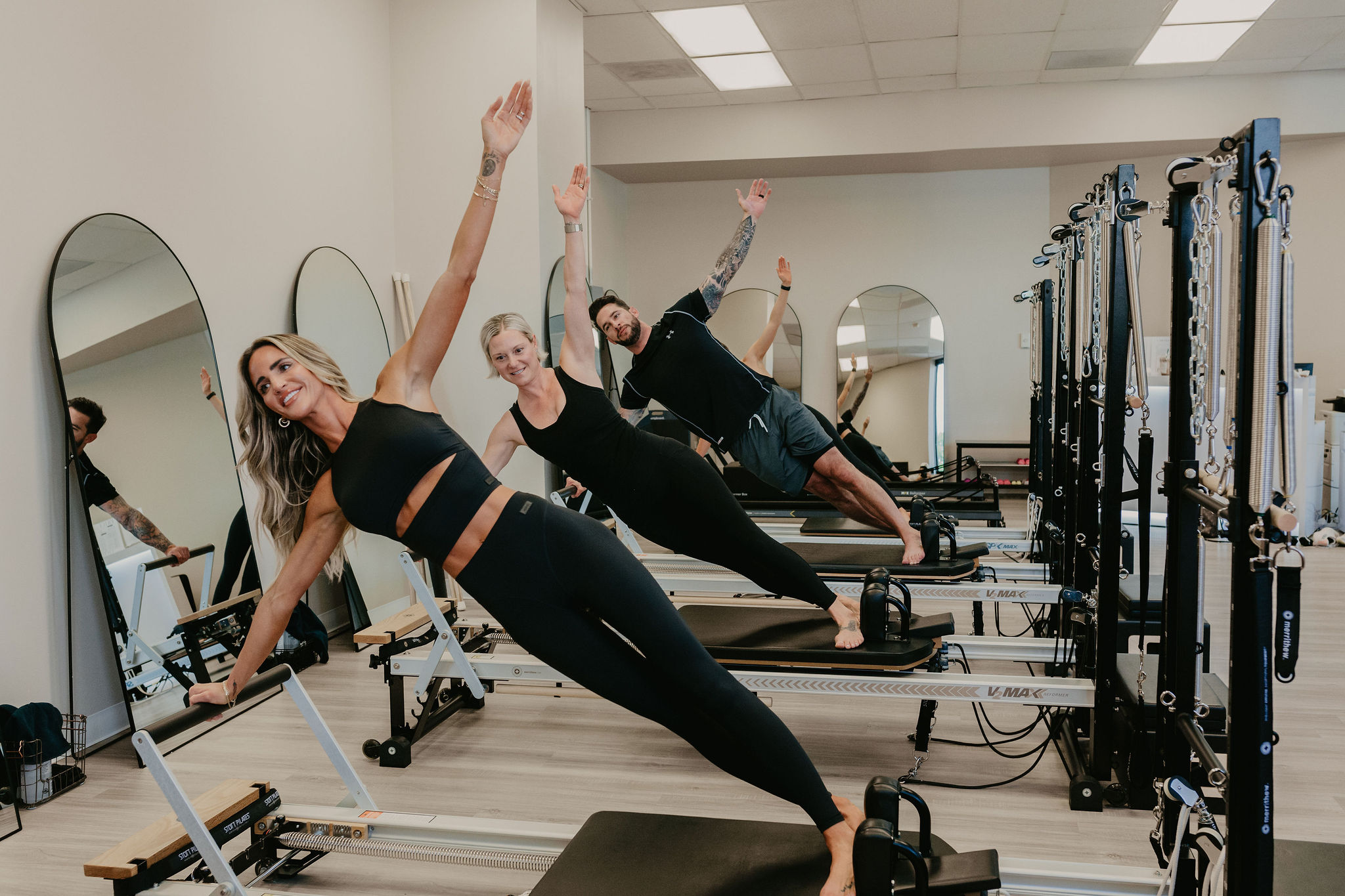
If you’re exploring a Pilates certification course, one of the most common and important questions you’ll face is:
Should I choose Mat Pilates certification or Reformer Pilates certification?
Both certifications play a crucial role in Pilates education, but they serve different purposes and suit different stages of learning. Choosing the right path depends on your goals, experience level, and how you plan to use your certification whether for personal mastery or professional teaching.
This guide explains the differences in depth, so you can make a clear, informed, and confident decision about your Pilates education.
Understanding Pilates Certification Pathways
Pilates certification is not a single, one-size-fits-all program. Most professional Pilates training pathways are layered, meaning students begin with foundational skills and gradually progress toward more advanced teaching techniques.
In structured Pilates education:
- Foundational understanding comes first
- Teaching skills develop gradually
- Equipment-based training builds on mat knowledge
Mat Pilates certification and Reformer Pilates certification are the two most common and essential training paths. Understanding how they differ and how they complement each other helps you choose the right starting point or decide whether to pursue both.
What Is Mat Pilates Certification?
Mat Pilates certification focuses on exercises performed on a mat using body weight as resistance. It emphasizes the core principles of Pilates, including control, alignment, breathing, precision and stability.
Mat training teaches you how Pilates works at its most fundamental level—without relying on equipment.
What You Learn in Mat Pilates Certification
A comprehensive Mat Pilates certification program typically covers:
- Core Pilates principles and movement foundations
- Proper posture, alignment and body positioning
- Breath control and coordination with movement
- Teaching cues and effective class sequencing
- Modifications for beginners and mixed-level classes
Mat certification helps students understand how to teach Pilates clearly and safely, especially in group class settings.
Why Mat Pilates Certification Is Important
Mat Pilates forms the foundation of all Pilates education. Without a strong mat background, it becomes difficult to teach Pilates with confidence and clarity.
Mat training:
- Develops teaching awareness
- Builds confidence in cueing and observation
- Strengthens understanding of movement mechanics
- Prepares instructors to adapt exercises intelligently
For this reason, Mat Pilates certification is often the entry point into Pilates instructor training.
Who Mat Pilates Certification Is Best For
Mat Pilates certification is ideal for:
- Beginners new to Pilates education
- Those who want a strong theoretical and practical foundation
- Instructors planning to teach group classes
- Fitness or wellness professionals adding Pilates to their skill set
Mat training builds clarity, confidence, and teaching awareness before progressing to equipment-based instruction.
What Is Reformer Pilates Certification?
Reformer Pilates certification focuses on teaching Pilates using the reformer machine, a specialized piece of equipment that uses springs, straps, and a sliding carriage to create resistance and support.
Reformer training allows for a wider range of exercises and deeper exploration of strength, control, and mobility.
What You Learn in Reformer Pilates Certification
A Reformer Pilates certification program typically includes:
- Reformer setup, adjustments, and safety protocols
- Teaching strength, control, and mobility using resistance
- Client-specific programming and exercise selection
- Progressions and regressions for different ability levels
- Skills for private and studio-based instruction
Reformer certification expands an instructor’s ability to teach Pilates in professional studio environments.
Why Reformer Pilates Certification Matters
Reformer training adds precision and depth to Pilates instruction. The resistance provided by the reformer highlights movement patterns, imbalances, and compensations that may not be as visible on the mat.
Reformer certification:
- Enhances teaching precision
- Supports individualized programming
- Prepares instructors for studio-based teaching
- Expands career opportunities
Because of this, Reformer Pilates certification is essential for instructors who plan to work in professional Pilates studios.
Mat vs Reformer Pilates Certification: Key Differences Explained
| Aspect | Mat Pilates Certification | Reformer Pilates Certification |
|---|---|---|
| Equipment | Mat only | Reformer machine |
| Difficulty Level | Beginner-friendly | Intermediate to advanced |
| Teaching Environment | Group classes, open spaces | Studios, private sessions |
| Learning Focus | Foundations and principles | Precision and resistance training |
| Ideal Starting Point | Yes | Best after mat training |
Both certifications are valuable, but they serve different stages of Pilates education rather than competing with each other.
Which Certification Should You Choose First?
Choosing the right certification depends on your background and goals.
Choose Mat Pilates Certification if:
- You are new to Pilates training
- You want to understand Pilates fundamentals deeply
- You plan to teach group or community classes
- You want a strong base before advanced training
Mat certification builds essential teaching and movement awareness that supports all future learning.
Choose Reformer Pilates Certification if:
- You already understand Pilates basics
- You want to teach in professional studio settings
- You aim to work with private or semi-private clients
- You want advanced movement and teaching skills
Most instructors who succeed with reformer training already have a solid mat foundation.
Do You Need Both Certifications to Become a Pilates Instructor?
While it is possible to teach with only a Mat Pilates certification, most professional Pilates instructors eventually pursue both certifications.
- Teach a wider range of clients
- Work confidently in studios and wellness centers
- Offer both group classes and private sessions
- Increase career flexibility and teaching opportunities
For instructors serious about long-term professional growth, combined training provides the strongest and most versatile foundation.
How to Choose the Right Pilates Certification Program
- Offers both mat and reformer education
- Emphasizes teaching skills, not just exercise performance
- Includes anatomy and movement understanding
- Progresses logically from basics to advanced techniques
- Supports beginners while maintaining professional depth
A well-structured program ensures safety, confidence, and long-term competence rather than rushed certification.
Final Thoughts
- Mat Pilates builds the foundation
- Reformer Pilates expands teaching capability
If your goal is to become a confident, capable, and responsible Pilates instructor, understanding both pathways helps you make a smarter and more strategic decision for your future.